
Weakest Link
"Weakest Link" is one of the most distinctive elimination quiz shows on television. Contestants answer general knowledge questions at speed, work together to build a prize total, and then turn against one another at the end of each round.
That combination gives the format its identity. Players need to perform well individually, contribute to the team, and avoid becoming the person everyone else considers expendable. Every round therefore mixes trivia with pressure, judgment, and group strategy.
How the Game Works
A group of contestants takes turns answering questions in sequence. Correct answers build a chain and increase the potential value of the round, while a wrong answer can break that progress. Players can usually secure what has already been accumulated before answering, creating an ongoing decision between continuing the chain and protecting the team’s total.
The questions move quickly, leaving little time to recover from mistakes. As the field becomes smaller, each contestant answers more often and individual performance becomes increasingly visible.
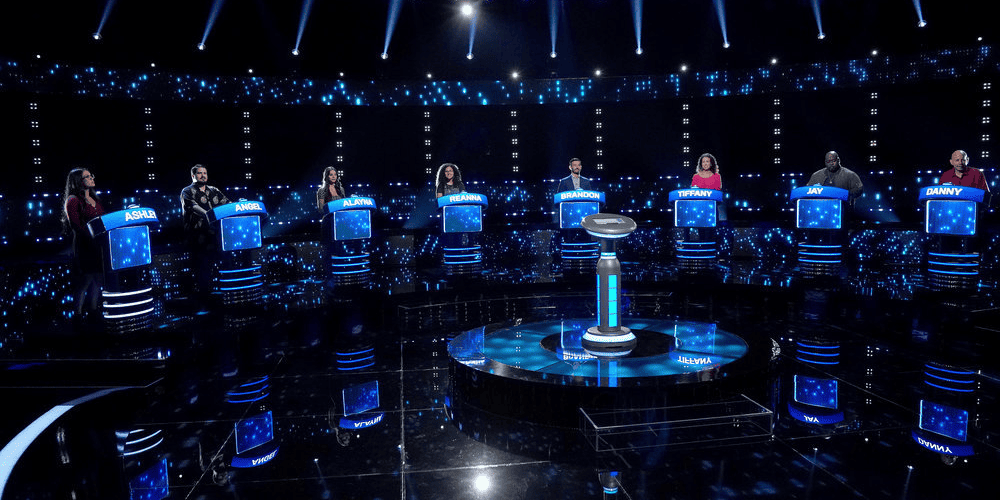
At the end of a round, the players vote privately for the person they want to remove. The contestant who receives the most votes is eliminated, and the game continues with one fewer participant.
Why the Voting Changes Everything
The elimination vote separates "Weakest Link" from a conventional quiz. The player with the weakest statistics may appear to be the obvious choice, but contestants are free to vote according to their own strategy.
A strong opponent can become a target because they may be difficult to beat later, while another contestant might survive despite making several mistakes. As a result, players must think about more than correct answers. They also have to consider how the rest of the group views them.
This creates a changing social dynamic in which cooperation is necessary to build the prize total, even though every contestant ultimately wants to reach the final.
The Host and the Show’s Tone
The host is central to the personality of "Weakest Link". Rather than adopting the warm style common to many quiz programs, the format traditionally favors a colder, more authoritative delivery.
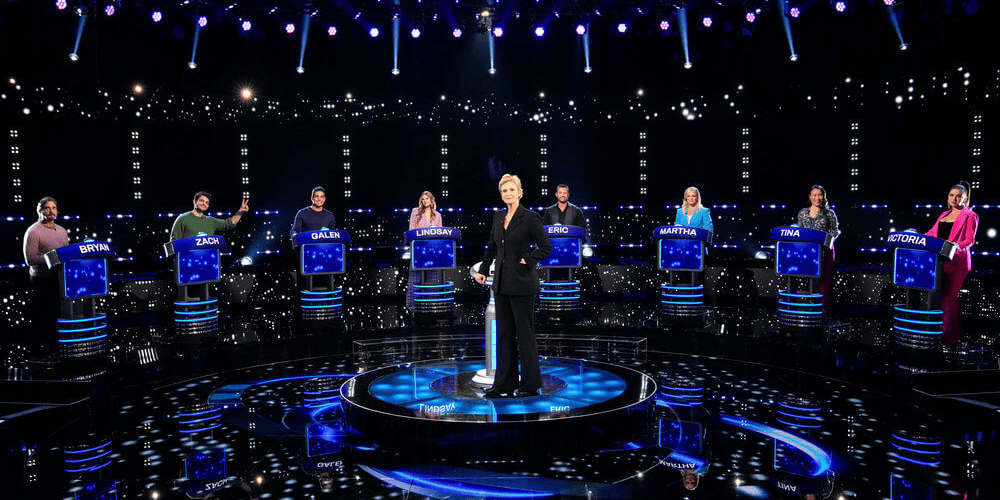
Questions are asked directly, mistakes are highlighted, and short exchanges with contestants often include dry or pointed humor. This deliberately severe presentation makes even an ordinary trivia round feel more intense and gives the show a tone that is instantly recognizable.
From Team Game to Final Duel
As contestants are eliminated, the group competition gradually becomes more personal. The remaining players have fewer teammates to rely on, and every incorrect answer carries greater weight.
Eventually, only two contestants remain. The format then shifts into a head-to-head final in which they answer questions individually to determine the winner. After spending most of the episode cooperating and voting against others, the last two players finally compete directly against each other.
This transition gives the show a clear dramatic progression: a large group becomes smaller round by round until the entire contest comes down to a single opponent.
Visual Style and Signature Elements
The presentation reinforces the pressure of the game. Contestants are typically arranged apart from one another on a dark, carefully lit set, while the host occupies a commanding position nearby. Music, countdowns, and sharp transitions keep the pace tight and emphasize the importance of every answer and elimination.
The show’s best-known ritual comes when an eliminated contestant is dismissed with the line “You are the weakest link. Goodbye!” The phrase became inseparable from the format and one of the most recognizable catchphrases associated with television quiz shows.
A Format with International Reach
"Weakest Link" developed into an international television format, with versions produced for audiences in numerous countries. Its simple structure made it easy to adapt, while the unusual combination of rapid-fire questions and contestant voting gave it a clear identity wherever it appeared. The format has also been widely referenced and parodied outside the program itself. Its elimination phrase, stern presentation, and voting ritual became familiar pieces of popular culture.
What continues to distinguish "Weakest Link" is the conflict built into its rules: contestants must cooperate to succeed as a team while knowing that, moments later, they may vote one another out. That tension remains the foundation of the show’s lasting appeal.