
Family Feud
"Family Feud" is one of television’s most recognizable survey-based game shows. Two families compete to guess the answers given by a group of 100 people, with points awarded according to how popular each response was.
The challenge is not to find a single correct answer, but to think like the survey group. That simple twist creates a mix of quick decisions, unexpected guesses, and plenty of comedy.
How the Main Game Works
Rounds usually begin with a face-off between one member of each family. After hearing a survey question, both players race to buzz in and identify one of the answers on the board. The family that gains control then tries to uncover the remaining responses. Each correct guess reveals another answer and adds its value to the round. Incorrect responses earn strikes, and after three strikes the opposing family gets an opportunity to steal by naming one of the answers still hidden.
Later rounds increase the point values, so the lead can change quickly. The family with the stronger total at the end of the main game advances to the final stage.
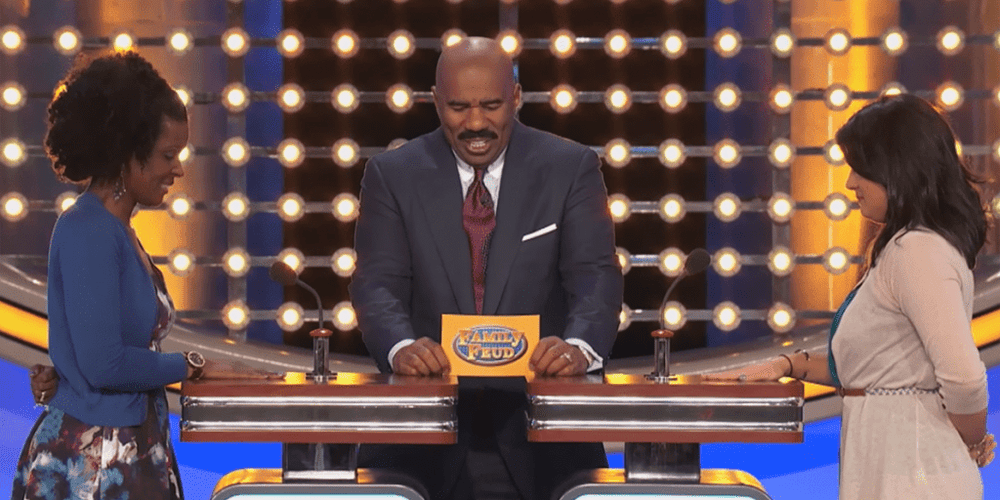
Fast Money
The winning family sends two members into Fast Money. Each is asked the same five survey questions separately, with the second player unable to hear the first player’s responses. Their answers earn points based on how many people in the original survey gave the same response. The two scores are combined, and reaching 200 points brings the round’s top reward.
The simplicity of Fast Money makes it one of the show’s most familiar segments: ten answers, a limited amount of time, and a clear target to beat.
The Families Make the Show
The contestants are central to the personality of "Family Feud". Parents, siblings, cousins, and extended relatives compete together, often bringing very different personalities and approaches to the game.
Some players answer instantly, while others hesitate, debate with teammates, or produce guesses that surprise everyone in the studio. These spontaneous reactions give the format much of its humor and prevent two episodes from feeling exactly alike.
Why It Is Easy to Play Along
Survey questions usually focus on familiar situations, everyday habits, relationships, jobs, food, entertainment, and other subjects that require no specialist knowledge. Viewers can therefore make their own guesses before the board is revealed.
The fun comes from comparing an individual answer with what a larger group actually said. An obvious response may rank lower than expected, while an unusual suggestion can sometimes appear surprisingly high on the board.
Hosts and Presentation
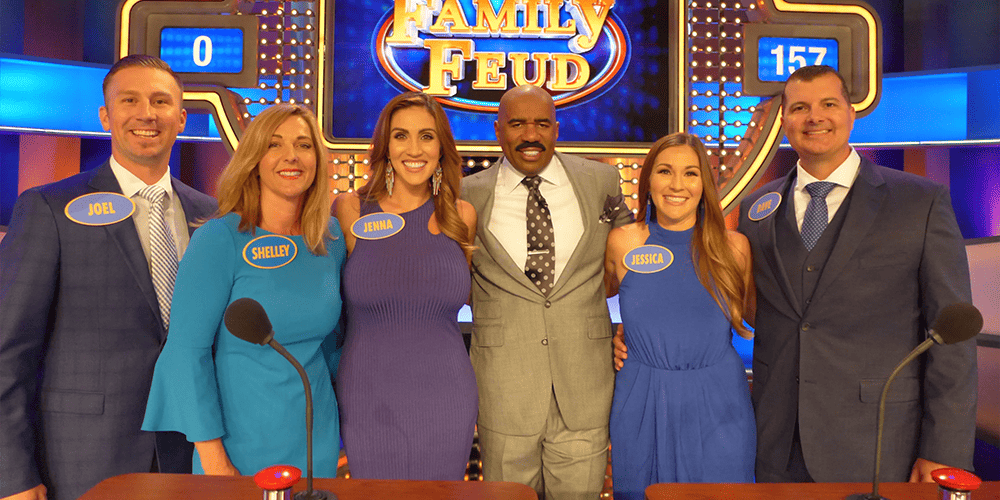
Different hosts have shaped the tone of "Family Feud" across its long television history. Richard Dawson became closely associated with the original era, while Steve Harvey brought a more reaction-driven style to the modern version.
The host’s conversations with contestants are an important part of the format, especially when an unusual answer produces an unexpected reaction. Bright graphics, the large survey board, buzzers, and familiar sound cues keep the game visually simple and easy to follow.
A Long-Running Television Favorite
"Family Feud" has remained popular through multiple versions and international adaptations because its central idea requires very little explanation. The phrase “Survey says!” has become closely associated with the show and is widely recognized beyond television.
Its lasting appeal comes from combining family competition with questions anyone can understand. The rules stay familiar, while the people, answers, and reactions ensure that every round can still produce something unexpected.